
In the silence of its ruins, Hampi whispers stories of grandeur and resilience—a bygone kingdom where trade flourished, temples sang, and culture thrived.
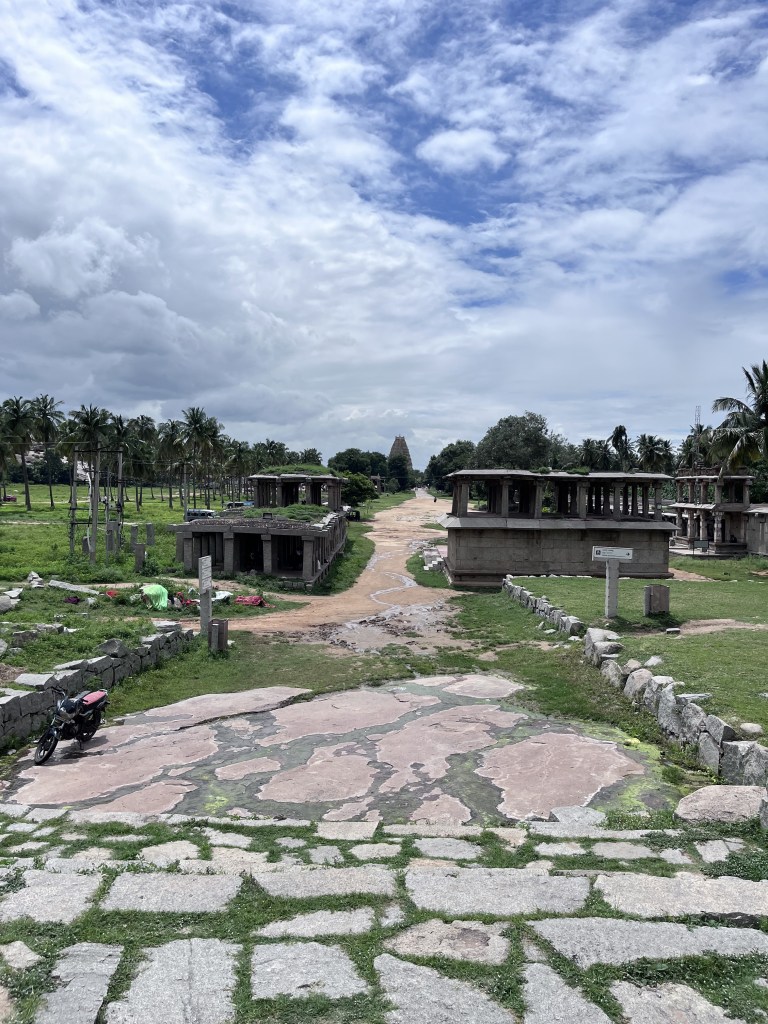
Hampi was more than just a travel destination for me—it was a longing that had been sitting in my travel bucket for years. Arriving at this UNESCO World Heritage site felt surreal. Stepping onto its ancient grounds, I found myself surrounded by stunning landscapes, towering boulders, and architectural marvels that painted a vivid picture of the Vijayanagara Empire’s golden era.
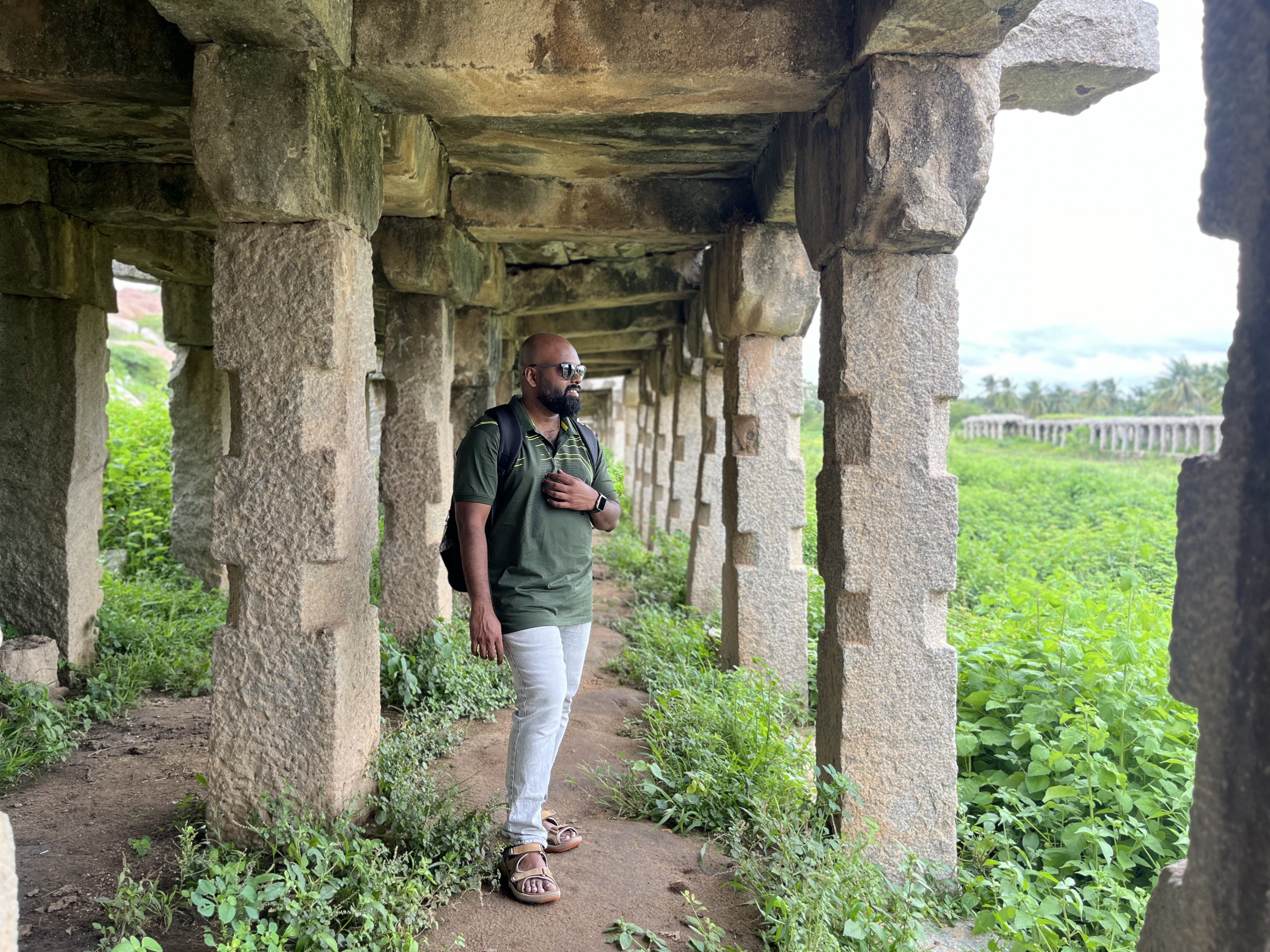
This trip wasn’t just about sightseeing. It was about feeling. From the moment I arrived, I was transported to an era where art, trade, and culture thrived in unparalleled harmony.
Day 1: Temple Trails and Timeless Tales
Virupaksha Temple – Where Spirituality Meets Marvel
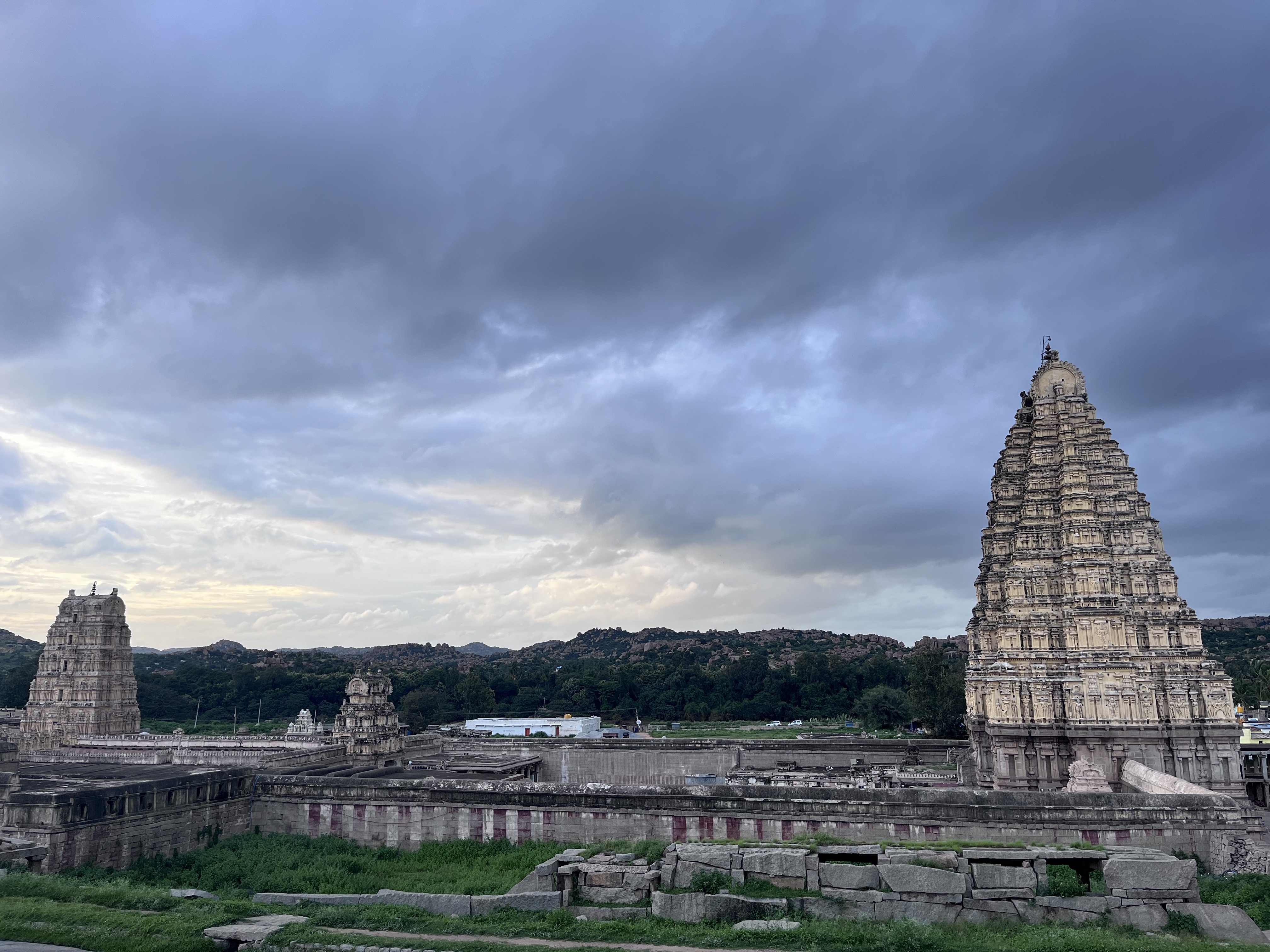
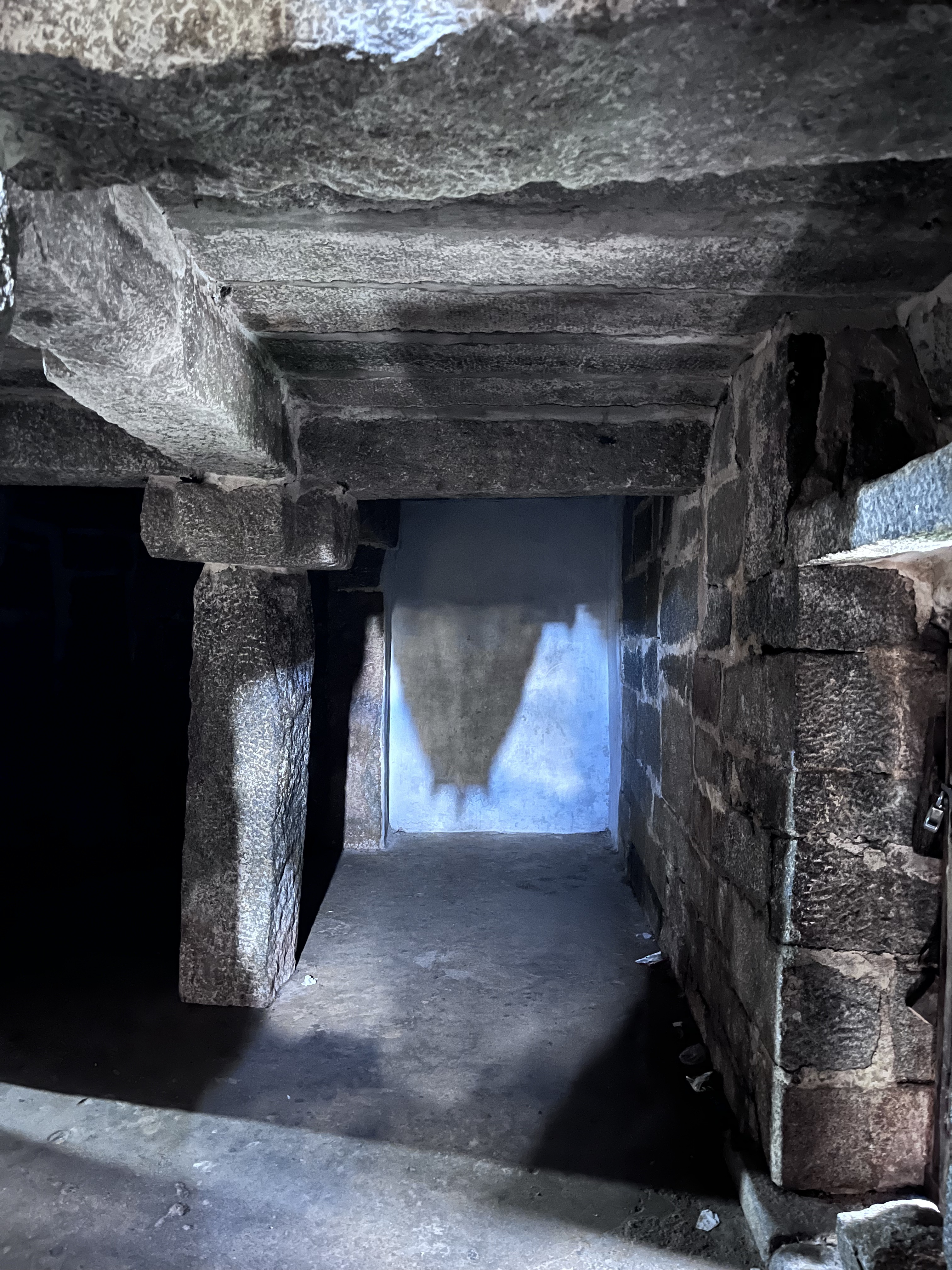
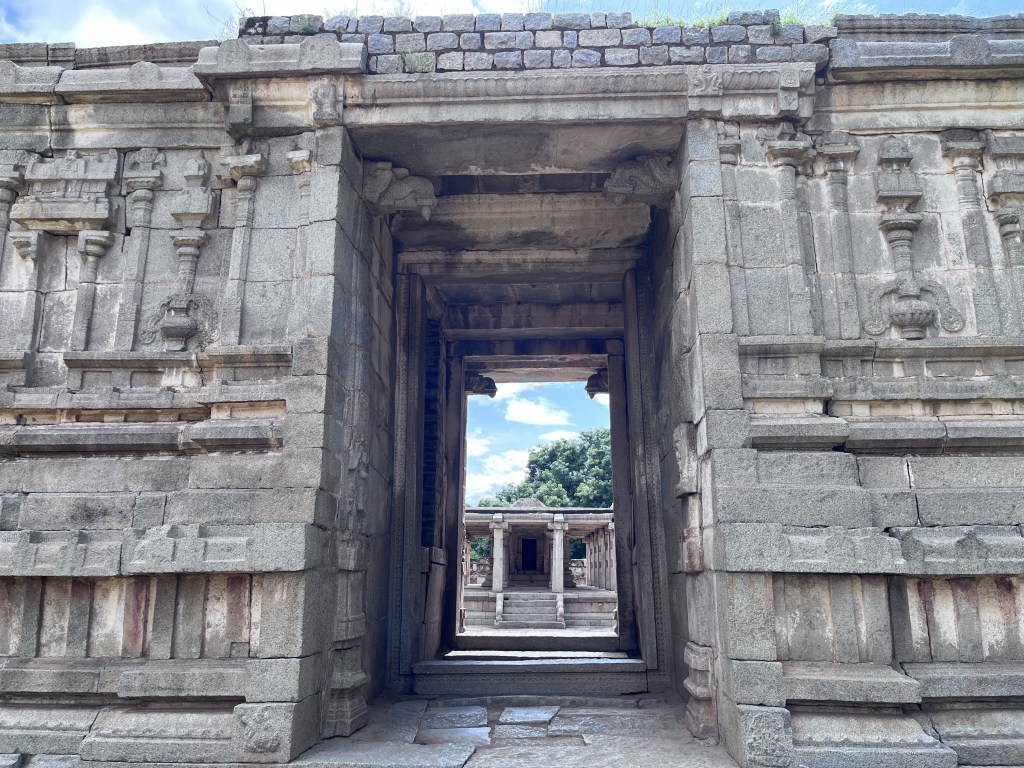
Imagine walking into a temple where every stone whispers tales of devotion, engineering, and mysticism. That’s what Virupaksha Temple offers. The inverted gopuram image wasn’t just a marvel—it was an experience that transported us to the spiritual heart of Vijayanagara.
The moment we heard the guide explain its connection to Kasi, our recent visit to the sacred city came rushing back. The architectural brilliance was staggering, but the spiritual resonance was even more powerful. We sat in the temple courtyard, the evening sun casting golden light on the gopuram, feeling a profound connection to something far greater than ourselves.


Hemakuta Hill – A Sunset Like No Other
Climbing Hemakuta Hill was worth every bead of sweat. As the golden sun dipped below the horizon, painting the landscape in hues of orange and pink, the temples glowed softly, narrating tales of devotion and artistry.
Just around the Virupaksha temple, there are a bunch of historical hotspots that you can visit for an auto ride costing you anywhere between 500 to 1000 INR, depending on whether the sun’s feeling generous or trying to boil you alive. But since the weather was as mild as our enthusiasm was high (we were basically the Energizer bunnies of sightseeing), we decided to jump in and conquer all the suggested locations. And let me tell you, every single stop was worth it!

Krishna Santhebidi Pond: A Peaceful Oasis Amidst Hampi’s Ruins
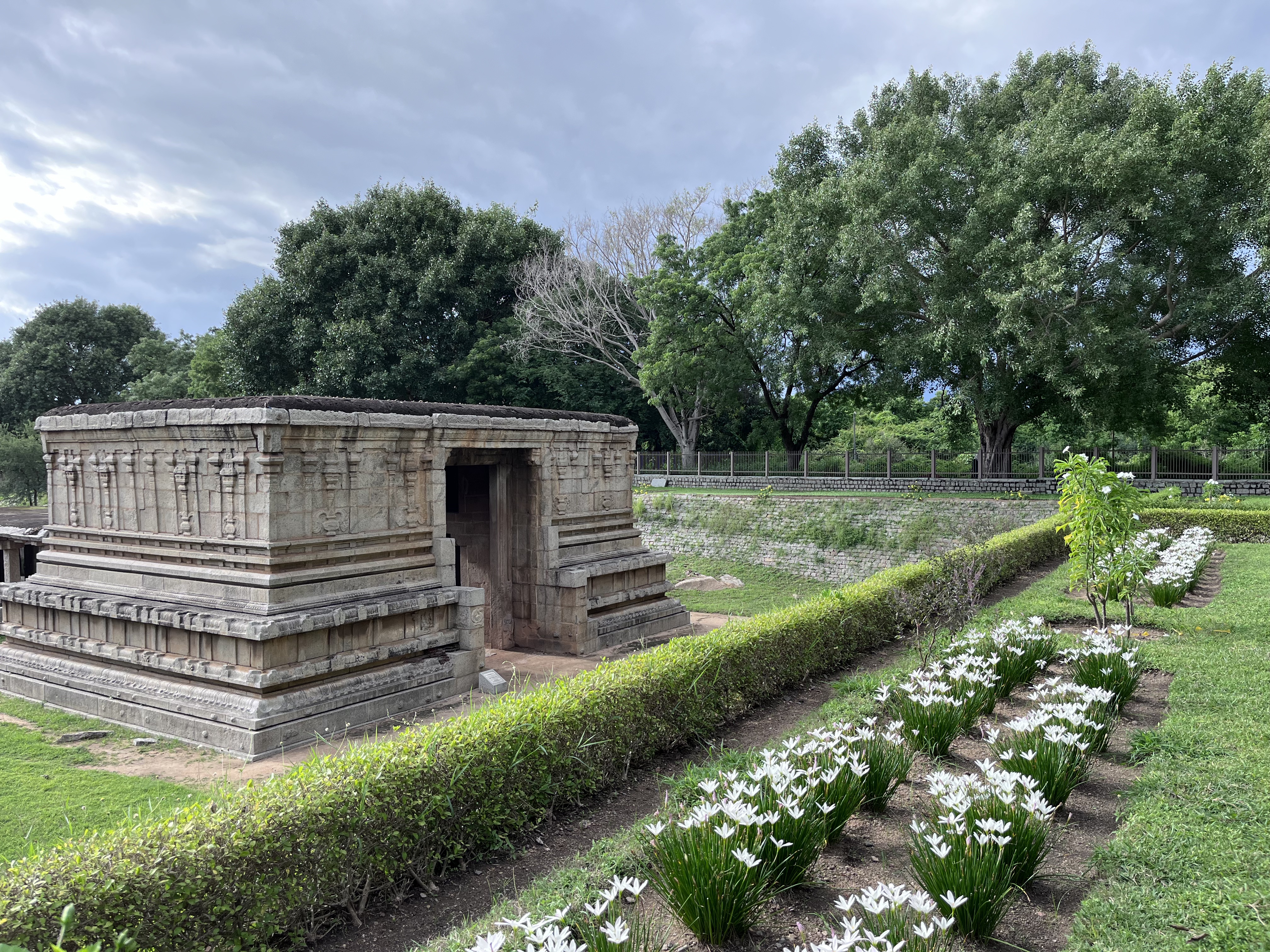
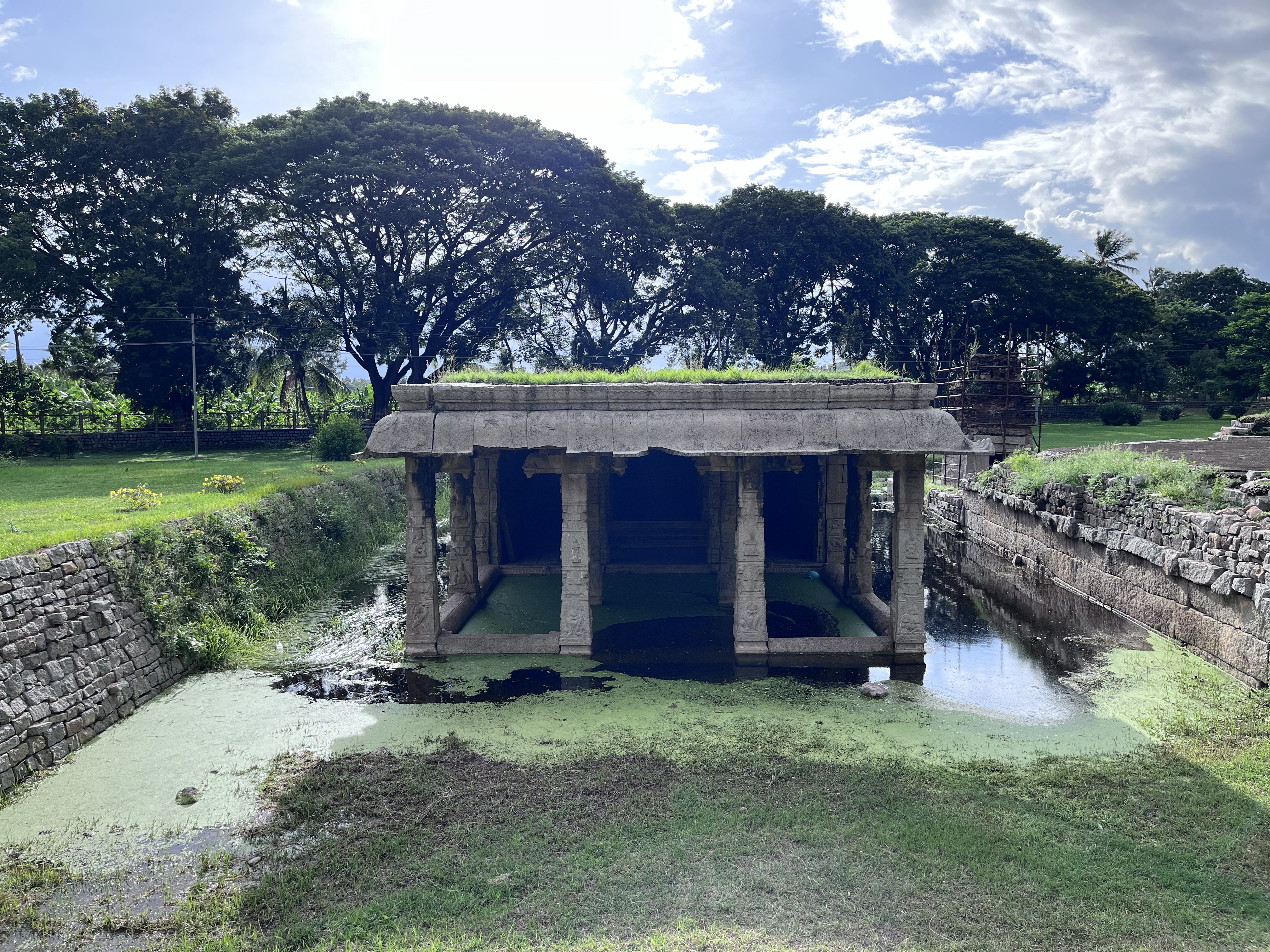
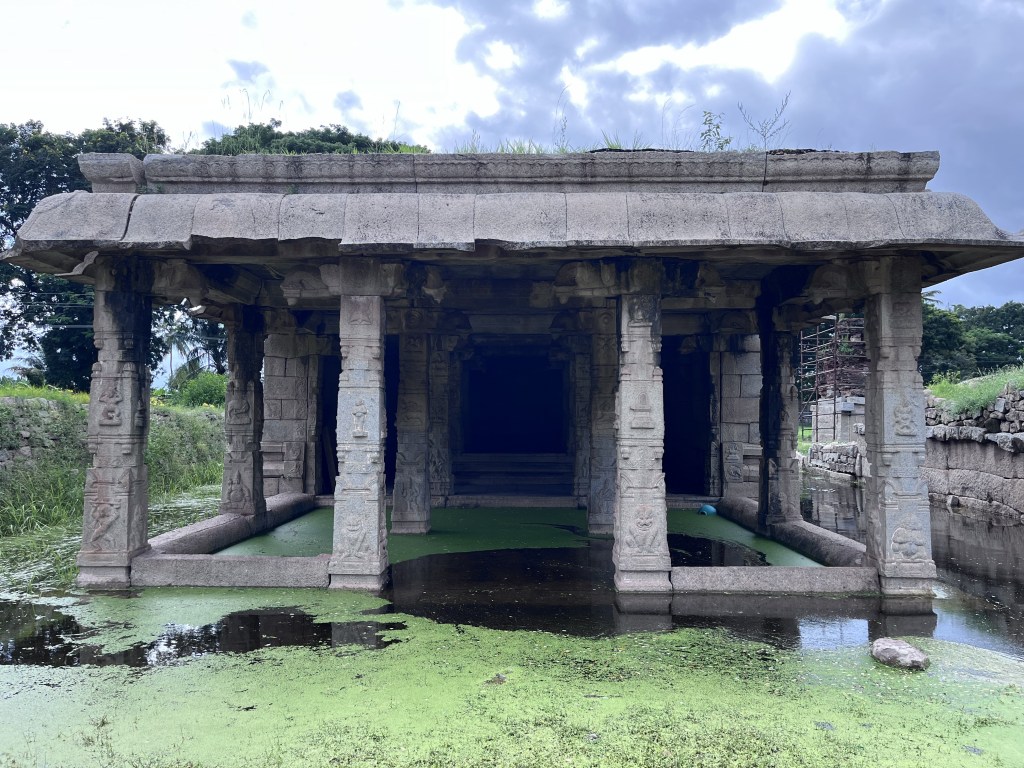
Nestled in front of the ancient Krishna Temple, the Krishna Santhebidi Pond is a serene spot that feels like stepping into a tranquil painting. Built in the 13th century, this historic pond is more than just a body of water—it’s a sacred site imbued with centuries of devotion and rituals.
During the monsoon season, typically from July to December, the pond brims with water, reflecting the lush greenery that surrounds it. The rain-drenched landscape transforms the area into a haven for reflective souls, offering a perfect backdrop for meditative moments and awe-inspiring photography.


I spent a quiet half hour here, with not a single crowd in sight. The calm was punctuated only by the soft rustling of leaves and distant temple bells. It was the kind of pause that allows you to soak in the essence of Hampi—a place where history whispers through the winds, and spirituality is etched into every corner.
Pro Tip: If you’re visiting during the monsoons, the vibrant greenery adds an extra layer of beauty to the pond, making it an ideal spot for reflective photos.
Whether you’re a history enthusiast, a spiritual seeker, or simply someone looking for a serene spot, the Krishna Santhebidi Pond is an understated gem in the sprawling ruins of Hampi. Don’t miss it!
Day 2: Hidden Gems and Stunning Views
Onake Kindi Cave Paintings – Hampi’s Hidden Secrets
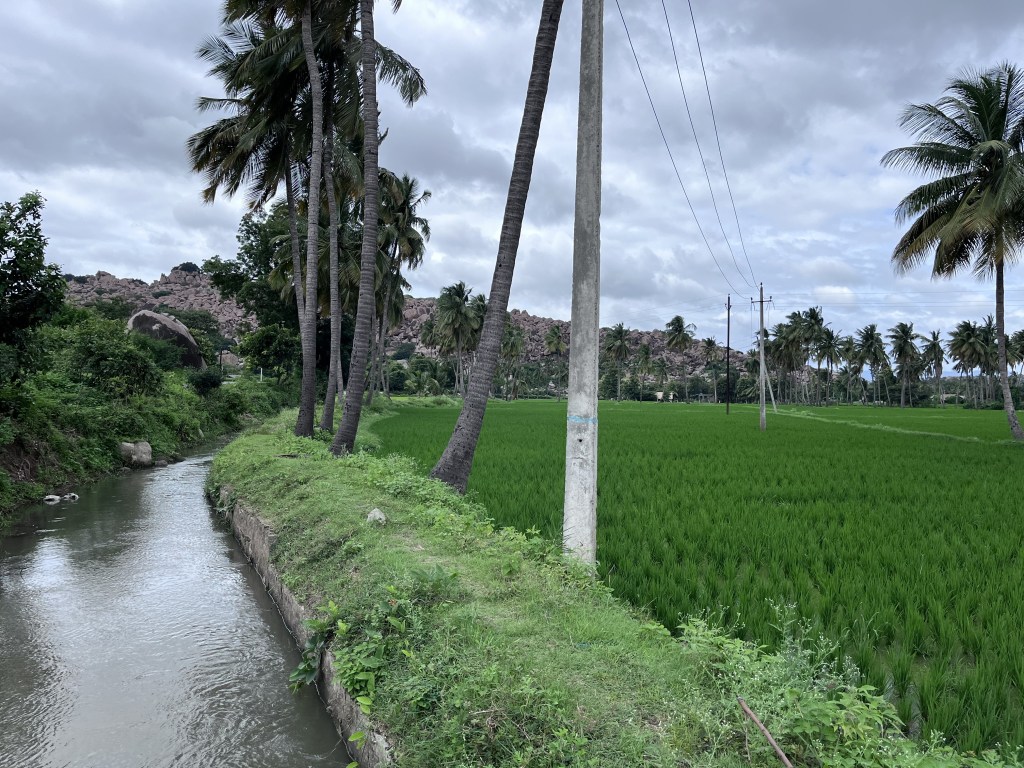
Venturing into the lesser-known Onake Kindi Cave Paintings felt like unearthing a hidden treasure. The day was lazy, and the sun was kinder than usual, cloaking Hampi in a warm, golden glow. As we crossed Hippie Island’s paddy fields and followed the directions of a local guide, the world seemed to quiet down.
The trek wasn’t easy—scrambling over boulders and squeezing through narrow paths, we wondered if this detour would be worth it. And then, we saw it. The ancient cave paintings, etched onto the rocks, stood as silent witnesses to a bygone era.
The artwork wasn’t just rudimentary—it was a glimpse into the lives of those who called this land home centuries ago. A curious drawing of what looked like alien figures gave us a good laugh, but it also made us think. Were they merely imaginative expressions of early humans? Or was there more to it? The boy leading us shared his own stories, albeit with some dramatic flair.
Under the shade of the caves, we let our imaginations run wild. The heat of the day melted away as we connected with the past, envisioning a world where art was the only language and survival was the ultimate goal. Leaving the cave, we handed over a small tip to the boy—it was the least we could do for guiding us to this forgotten corner of history.
The Mystical Coracle Ride
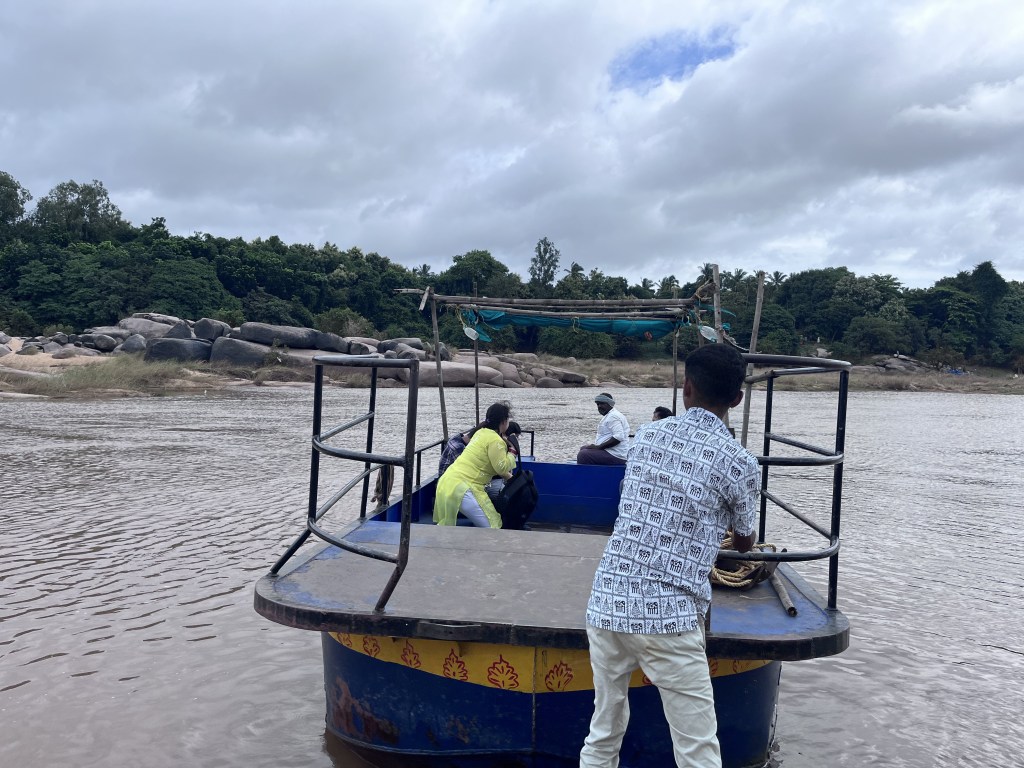
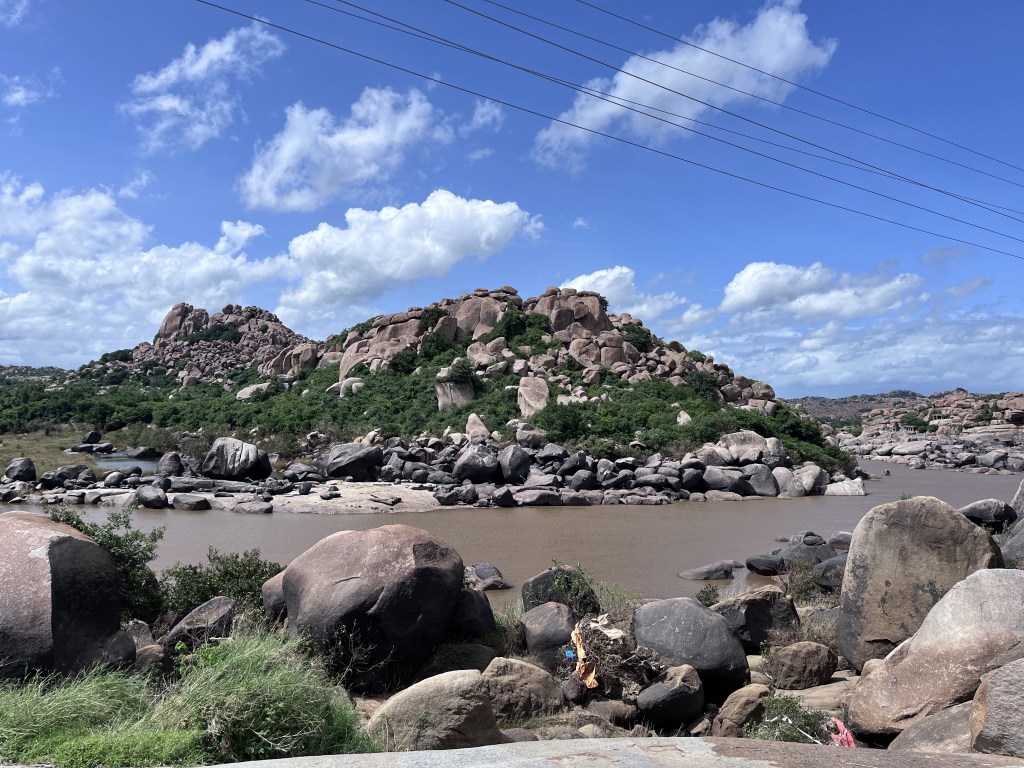
Sadly, the Tungabhadra’s coracle rides were closed during our visit. However, I couldn’t help but imagine drifting on the serene river, surrounded by boulders that seemed to stand as sentinels of time.
Kishkindha Trek: A Mythological and Scenic Expedition in Hampi
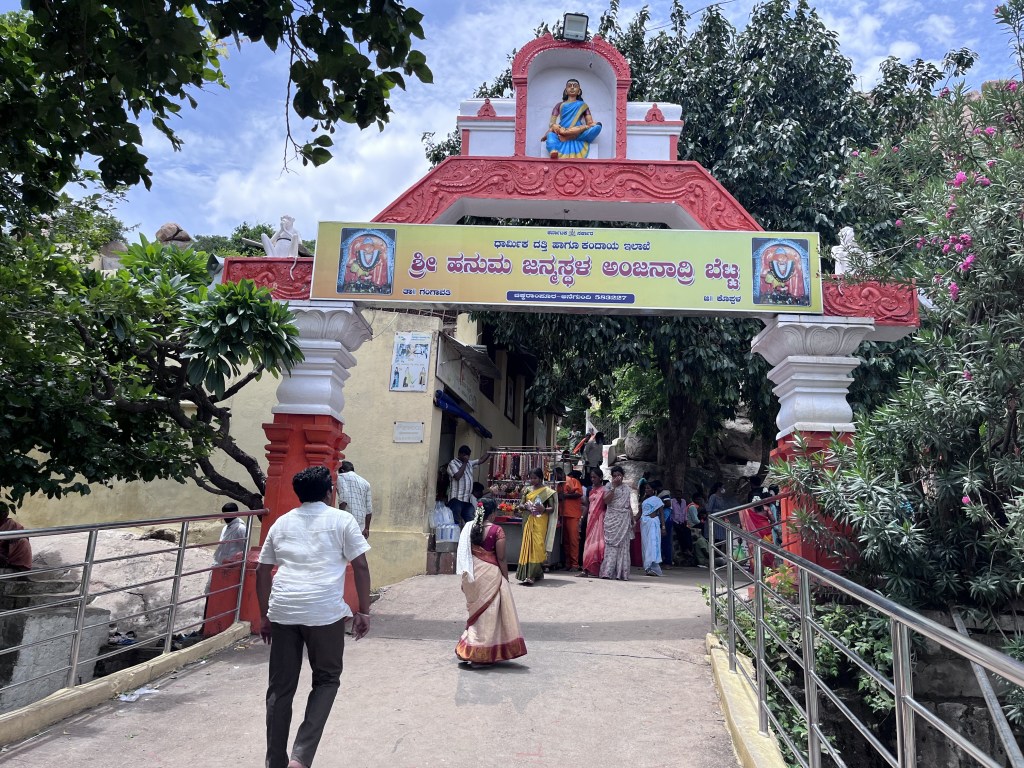
The Kishkindha trek in Hampi isn’t just another hike—it’s a journey through history, mythology, and breathtaking landscapes. Named after the fabled kingdom of Kishkindha from the Ramayana, this trek takes you through terrains that are steeped in legends of Hanuman, Sugriva, and Lord Rama.
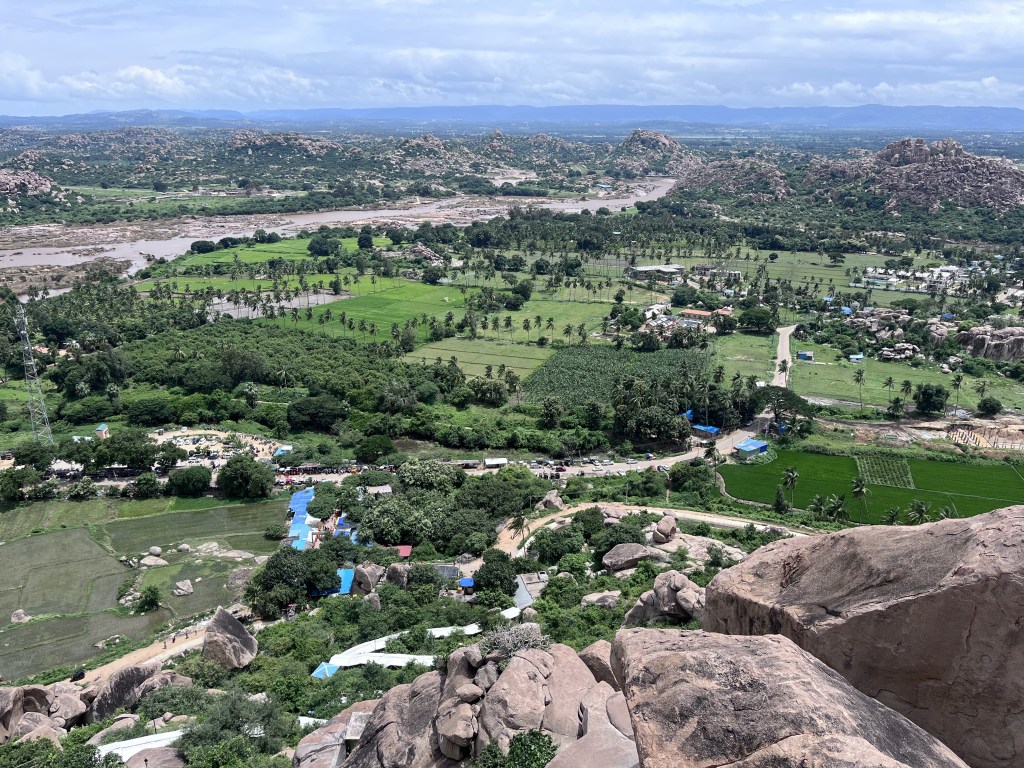
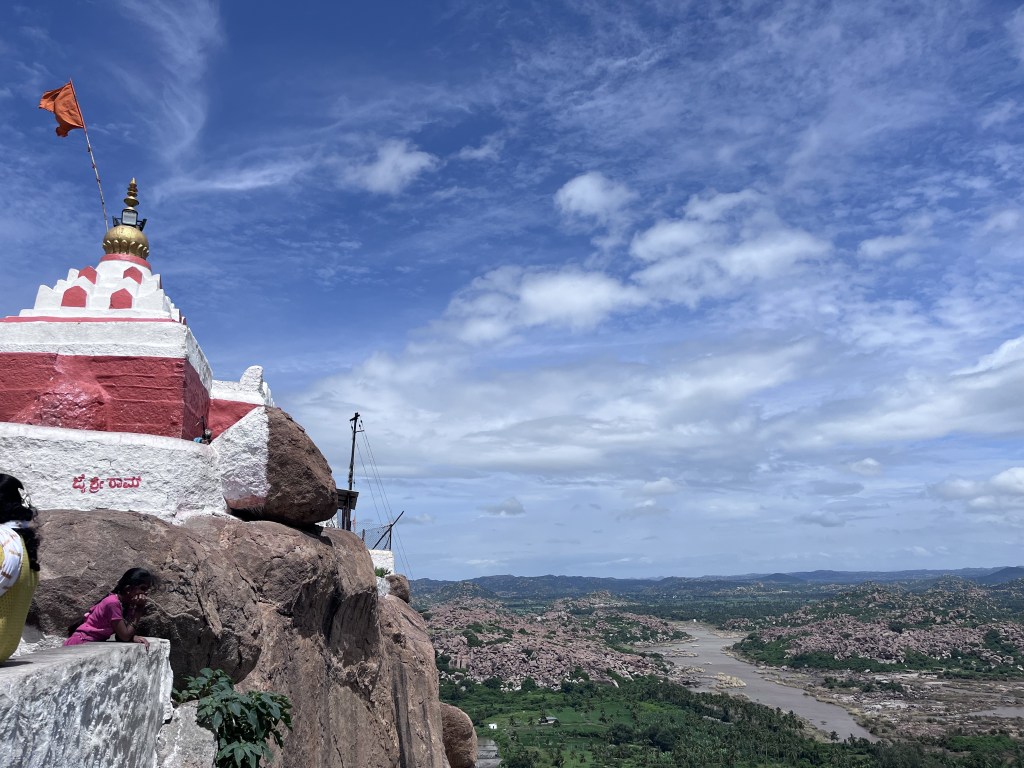
Starting at the foot of the majestic Anjanadri Hill, this trek unfolds as a breathtaking tapestry of spirituality and adventure. The trail beckons with ancient temples, rugged boulder-strewn vistas, and sweeping panoramic views that ignite a sense of wonder at every turn. As you climb higher, the wind dances around you, whispering the timeless tales that have woven themselves into the very fabric of Indian mythology, inviting you to immerse yourself in its enchanting stories.
The trek’s ultimate thrill is hitting the Anjanadri Temple, rumored to be the birthplace of Lord Hanuman. Perched atop the hill, the view is nothing short of surreal: the Tungabhadra River winds through the scenery, while Hampi’s chaotic, boulder-laden landscape sprawls endlessly. And don’t get me started on the sunset; it’s notorious for shattering expectations, igniting the whole horizon with fiery hues of gold and amber that leave you breathless.
The Trekking Experience:
- Start Point: The trail begins near Anegundi village and leads you through winding paths flanked by lush greenery and rugged rocks.
- Elevation: The trek is moderate and takes around 30-40 minutes to ascend, making it suitable for beginners.
- Historical and Cultural Significance: Every step feels like a walk through time, as you pass ruins, temples, and carvings that speak volumes about Hampi’s glorious past.


Hippie Island and the Laid-Back Life
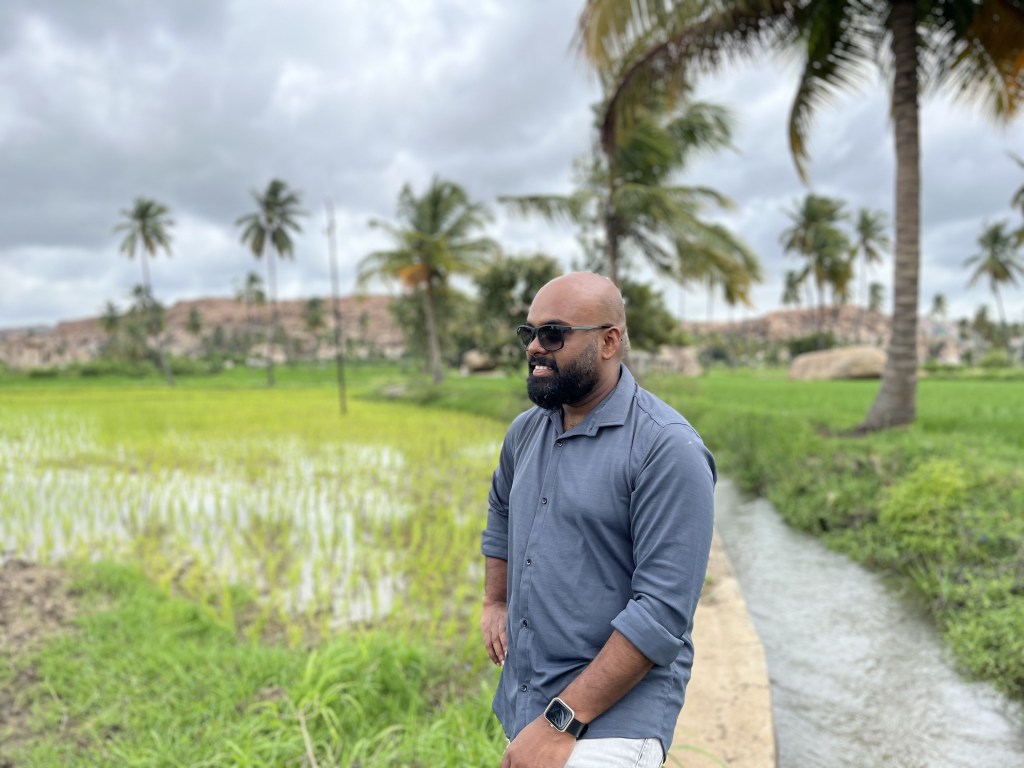
A visit to Hippie Island was like hitting the pause button on life. The Laughing Buddha restaurant became our sanctuary, where beer, great food, and soulful music created the perfect ambiance. Watching the sun set over the paddy fields, we couldn’t help but feel a sense of gratitude for moments like these.
Day 3: Ruins, Rides, and Reflections
Vittala Temple – Music Carved in Stone
Though the musical pillars were inaccessible, their aura lingered in the air. Stories of the artisans who carved these sound-producing columns filled us with admiration. The trek to the temple was exhausting, but standing in its shadow, the fatigue faded, replaced by a sense of accomplishment and reverence.

Queen’s Bath and Lotus Mahal
The Queen’s Bath, a symbol of royal indulgence, left me in awe of the ingenuity of ancient water systems. Nearby, the intricately designed Lotus Mahal, with its Indo-Islamic architecture, stood as a testament to cultural synthesis.
Tungabhadra Dam – An Engineering Marvel
Traversing the reservoir road on a bike was one of the most thrilling experiences of the trip. The ride along the Tungabhadra Dam felt almost cinematic—breathtaking views, cool breezes, and a sense of freedom that only open roads can bring.
At one point, the dam’s water level was at eye height, creating an intimidating yet mesmerizing view. We stopped to take it all in—the enormity of the dam, the stillness of the water, and the realization of how this marvel sustains so many lives in the region.


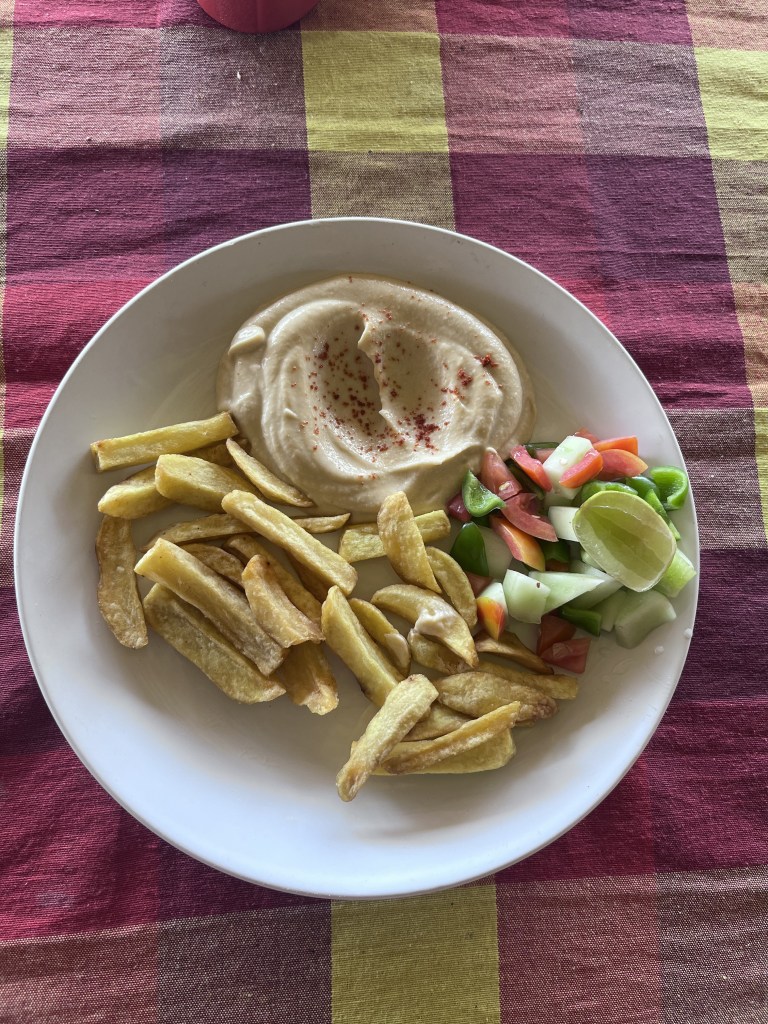
Hampi’s Flavors: A Culinary Journey
Mango Tree: A must-visit! Their Mango Lassi and authentic Indian meals were the perfect way to recharge.
Taste of Brahmins: Simple yet delicious dosa, paired with unmatched hospitality.
Laughing Buddha: For a laid-back vibe, great food, and green paddy field views, this spot is unmatched.
Pro Tip: Avoid Crazy Panda on Hippie Island. The food didn’t live up to the hype, and our experience was less than pleasant.



Budget and Practical Tips
How We Got There
- Train: YPR-SNRR Express from Yesvantpur to Hospet Junction (INR 855 per person).
- Auto and Bike Rentals: Autos are available for INR 100-250 per ride. Bike rentals cost INR 500/day, but quality can be an issue, so call ahead to confirm availability.
Accommodation
- Lotus Riya: A budget-friendly option with clean rooms and great hospitality.
Best Time to Visit
Visit between October and February for pleasant weather. Avoid peak summer months, as the heat can be intense.
What to Pack
- Light clothing and a refillable water bottle.
- Sunscreen, hats, and an umbrella for the sunny days.
- Comfortable walking shoes for temple explorations.
Travel Mistakes to Avoid
- Plan coracle rides in advance and confirm availability.
- Avoid eating at Crazy Panda and be cautious of some roadside vendors.
- Ensure your bike rental is in good condition—test it before heading out.
What’s Next?
As we bid farewell to Hampi’s timeless beauty, the glitz and glamour of Dubai await. Get ready to explore immersive art, stunning skylines, and thrilling adventures. Stay tuned for our next escapade!
Call to Action:
Loved our Hampi Chronicles? Subscribe for more travel tales, hidden gems, and budget-friendly hacks. Let’s explore the world, one story at a time! 🌏✨
Through Our Lens: A Journey Worth Reliving
“The sun sets on Hampi, but its spirit continues to glow in the hearts of those who wander its ruins. Each stone, each pillar, holds stories of a bygone era, waiting for you to uncover.”







 Rijju's Runway